A theft charge in Los Angeles County is an accusation that can follow you everywhere you go, affecting your job, your family, and your standing in the community. You are likely concerned about jail time, a criminal record, and how this moment will redefine your life.
The law in California groups a wide array of actions under the umbrella of "theft." The specific allegation against you dictates the severity of the consequences you face, but it also determines what the prosecution must prove. With the right legal assistance, we can parse through the facts of your case and build a defense to protect your name.
If you're staring down a theft charge, our team can deliver a clear, honest assessment of your case and outline your real options. Call Olen Firm, P.C. for a confidential case review at (213) 999-8380.
Our firm provides direct, personal attention to every client.

Our founding attorney, Jared Olen, spent nearly eight years as a Los Angeles County Public Defender. In that role, he represented thousands of clients and handled dozens of jury trials, from simple misdemeanors to life-changing felonies. This background gives our firm a deep understanding of how prosecutors build their cases and how to take them apart.
This experience directly benefits your case.
A "theft" charge is a broad category covering multiple offenses under the California Penal Code. The specific details of the allegation against you are what determine the seriousness of the penalties you might face.
The prosecutor builds a case based on the type of theft they believe occurred, and each type has distinct elements they must prove beyond a reasonable doubt. Understanding these distinctions is where a strong defense begins.
You may be facing charges for a more specific offense, each with its own definition and potential consequences:
In 2014, California voters passed Proposition 47, also called the Safe Neighborhoods and Schools Act. This law significantly altered the landscape for nonviolent theft and drug offenses.

Its most notable change was raising the threshold for felony theft from $400 to $950 to account for decades of inflation. This means several theft-related crimes that could have been charged as felonies are now classified as misdemeanors if the property value falls below $950.
The offenses reclassified from potential felonies to misdemeanors include:
It is a common misunderstanding that Proposition 47 decriminalized theft below $950. That is incorrect. Theft of any value is still a crime. The law only changed how these offenses are classified and punished. This shift aims to reduce prison overcrowding by directing lower-level offenders away from state prison sentences.
The penalties for a theft conviction in California are directly tied to how the crime is charged.
A misdemeanor conviction typically includes penalties such as up to one year in county jail, fines, and informal probation.
Felony penalties carry far more serious consequences, including potential sentences in state prison, higher fines, and formal probation. For grand theft charged as a felony, this could mean 16 months, two, or three years in prison.
A theft conviction leaves a lasting mark on your record that creates long-term hurdles. It may affect your ability to find a job, secure a professional license, or even find housing. For non-citizens, a theft conviction could have severe consequences for your immigration status.
A theft charge does not automatically lead to jail time, especially for first-time offenders accused of a misdemeanor. California law provides for several "diversion" programs that offer a different path.
Diversion is a legal concept that allows a defendant to complete certain court-ordered requirements in exchange for having their charges dismissed. Think of it as an off-ramp from the traditional criminal court process. If you successfully complete the program, the arrest and charge will not result in a conviction on your record.
Common diversion programs in Los Angeles County include:
These programs are not guaranteed. A prosecutor may argue against your eligibility, or a judge may deny it based on the facts of the case or your criminal history. This is an area where a knowledgeable defense attorney can make a significant difference by preparing and presenting a compelling argument for your inclusion in a diversion program.
An arrest is not a conviction. The prosecution carries the burden of proving every element of its case against you beyond a reasonable doubt. A thorough defense is built to show they cannot meet this high standard.
Several established legal defenses can be used to challenge theft allegations. The right strategy is entirely dependent on the facts of your case.

The period between an arrest and your first court date is a critical window. The actions you take (and those you avoid) will have a real impact on the direction of your case. While your legal team prepares your defense, here is what you should and should not do.
Yes, in many situations. California Penal Code 1203.4 allows for a past conviction to be dismissed through a process commonly called expungement. If you successfully complete probation and meet all other legal requirements, we can petition the court to set aside the conviction. This releases you from many of the penalties associated with having a criminal record, allowing you to truthfully state on most job applications that you have not been convicted of a crime.
Yes. The crime of theft is legally complete the moment you take the property with the intent to steal it. Returning the property later does not erase the initial act. However, the fact that you returned the property can be a mitigating factor. Your attorney may be able to use it in negotiations with the prosecutor to argue for a more favorable outcome, like reduced charges or entry into a diversion program.
For non-U.S. citizens, a theft conviction can have devastating immigration consequences. Theft is considered a "crime involving moral turpitude" (CIMT) by immigration authorities. A conviction for a CIMT can lead to deportation, denial of naturalization, or prevent you from re-entering the United States. The specifics depend on whether the conviction is a misdemeanor or felony and the details of the crime.
After a shoplifting incident, you may receive a formal-looking letter from the retailer's attorney demanding payment under a civil law, California Penal Code 490.5. This is entirely separate from your criminal case. Do not pay this without speaking to a criminal defense attorney first. Paying the demand does not mean the criminal charges will be dropped, and in some cases, it can be interpreted as an admission of guilt.
Absolutely. A citation for misdemeanor theft requires a court appearance and is just as serious as being physically arrested and booked into jail. If you fail to appear in court on the date listed on the citation, a warrant will be issued for your arrest. A conviction will still result in a criminal record, so it is important to address the citation with the help of a Los Angeles theft lawyer.
Los Angeles County, with its large volume of cases, often utilizes different local options than other counties. For example, the District Attorney’s office employs specific diversion programs tailored to the LA system, like neighborhood justice or specific mental health courts, that may not exist elsewhere.
A defense attorney must know the specific practices and court culture of the downtown LA, Van Nuys, or Airport courthouses where your case appears to secure the most favorable outcome.
A typical misdemeanor theft case involves several steps: the arraignment (first court date), pretrial negotiations, and possibly a hearing or trial.

Remember, a charge is just an allegation—it is not a conviction. You have the right to a defense. By challenging the prosecution's case with a proactive and strategic approach, you can work to protect your record and move forward. We begin building that defense from the moment you hire our firm, investigating every angle to put you in the strongest possible position.
You do not have to go through this alone. Take the first step toward putting this behind you.
Call Olen Firm, P.C. today for a confidential consultation at (213) 999-8380.
"*" indicates required fields

Contact the Olen Firm today
213-999-8380. Our experienced Criminal Defense Law Firm is available for a Free Confidential Consultation.
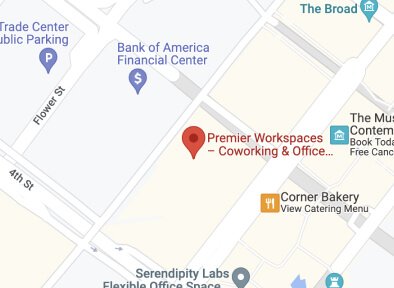
355 S Grand, Suite #2450 Los Angeles, CA 90071
Phone: 213-999-8380
"*" indicates required fields
