
Domestic battery strangulation charges are among the most serious domestic violence allegations under California law. Los Angeles prosecutors frequently file these cases as felonies, exposing defendants to state prison sentences, criminal protective orders, and long-term consequences.
Allegations involving strangulation or suffocation receive heightened attention from law enforcement, even when physical evidence is limited. A single accusation can affect your freedom, employment, firearm rights, and family relationships. Early legal action can influence how the case proceeds.
Contact Olen Firm today for a free, confidential consultation with a Los Angeles domestic battery strangulation lawyer.

When you hire a Los Angeles domestic battery strangulation lawyer from our firm, you gain a defense team that understands what is at stake. Attorney Jared Olen spent years as a deputy public defender representing thousands of clients on misdemeanor and felony charges before founding this firm. That courtroom experience informs every strategic decision we make when defending our clients.
We begin every strangulation case by closely examining the evidence the prosecution intends to rely on. Medical records, photographs, witness statements, and police reports all receive thorough review. In many cases, evidence that appears damaging at first contains inconsistencies or gaps that a skilled defense attorney identifies and challenges.
Building your defense begins the moment you contact our office. We gather information about the incident, the alleged victim, and any witnesses while details remain fresh. Early involvement in domestic violence cases often proves valuable because evidence supporting your defense may disappear if not preserved quickly.
Our legal team also examines the conduct of law enforcement during the investigation. Officers responding to domestic violence calls must follow specific protocols under California Penal Code Section 13730, which requires documentation of whether strangulation or suffocation occurred. Failures in investigation or documentation may provide grounds to challenge the reliability or completeness of the prosecution’s case.
Our Los Angeles domestic battery strangulation lawyers appear alongside you at every court date, from arraignment through preliminary hearings and trial if necessary. We negotiate with prosecutors when it benefits your case and prepare aggressively for trial when it does not.
Many domestic battery strangulation cases benefit from pretrial motions that challenge the admissibility of evidence or question whether probable cause exists to support the charges. Our firm has obtained dismissals and charge reductions in some domestic violence matters through strategic motion practice and advocacy, depending on the facts of the case.
California treats domestic battery involving strangulation as a serious domestic violence allegation that prosecutors often pursue aggressively.
The Diana Gonzalez Strangulation Prevention Act of 2011 amended Penal Code Section 273.5 to explicitly include strangulation and suffocation within the definition of traumatic condition. Prosecutors in Los Angeles County pursue these charges aggressively, and understanding the specific statutes that apply helps you appreciate the stakes involved.
Under PC 273.5, it is unlawful to willfully inflict corporal injury resulting in a traumatic condition upon certain protected individuals. The statute defines traumatic condition as a wound or external or internal injury, whether minor or serious, caused by physical force.
Strangulation and suffocation are specifically defined as impeding normal breathing or blood circulation by applying pressure to the throat or neck.
The statute applies only when the alleged victim falls within specific relationship categories. The prosecution must prove that the person allegedly injured was one of the following:
If the alleged victim does not fall within one of these categories, charges under PC 273.5 are not appropriate. Our Los Angeles domestic battery strangulation lawyers examine every aspect of the alleged relationship to determine whether the statute applies to your situation.
For a domestic battery strangulation conviction in Los Angeles, the district attorney must establish specific facts to the jury or judge. The prosecution bears the burden of proving each element beyond a reasonable doubt, which represents the highest standard of proof in the American legal system.
The prosecution must demonstrate that the defendant willfully inflicted physical injury, that the injury resulted in a traumatic condition, that the alleged victim falls within a protected category, and that the defendant's actions were not in lawful self-defense or defense of another person. A failure to prove even one required element can lead to acquittal or reduced charges.

The penalties for domestic battery strangulation extend far beyond incarceration and fines. A conviction creates lasting consequences that affect employment, housing, family relationships, and civil rights. Anyone facing these charges in Los Angeles needs to understand the full scope of potential outcomes.
Criminal Sentencing for Misdemeanor and Felony Convictions
Penal Code 273.5 is a wobbler offense, meaning prosecutors have discretion to file misdemeanor or felony charges. The decision typically depends on the severity of alleged injuries, the defendant's criminal history, and the specific circumstances of the incident.
A misdemeanor conviction carries up to one year in county jail and fines up to $6,000. Felony convictions expose defendants to two, three, or four years in California state prison, with the same maximum fine. Prior domestic violence convictions within seven years may trigger enhanced penalties, including mandatory minimum jail terms and increased potential state prison exposure under applicable enhancement statutes.
Beyond incarceration, courts typically impose the following conditions in domestic battery strangulation cases:
These conditions continue affecting defendants long after any jail or prison sentence ends.
A domestic violence conviction creates barriers that persist indefinitely. California law and federal law both prohibit convicted domestic abusers from owning or possessing firearms. Professional licenses in healthcare, law, education, and other fields may be denied or revoked following conviction.
Immigration consequences require particular attention for non-citizen defendants. Certain domestic violence convictions may be deportable offenses under federal immigration law, depending on the specific charge and sentence imposed. Employment background checks reveal domestic violence convictions, and many employers decline to hire applicants with violent offense histories.
Child custody proceedings are directly affected by domestic battery convictions. California family courts presume that granting custody to a parent convicted of domestic violence within five years is not in the child's best interest. This presumption is difficult to overcome and may result in supervised visitation or loss of custody rights.
Domestic battery strangulation charges are defensible. Experienced Los Angeles domestic battery strangulation attorneys know that the prosecution's evidence often contains weaknesses that support acquittal or charge reduction. The right defense strategy depends on the specific facts of your case.
Physical evidence in strangulation cases frequently falls short of what prosecutors claim. Medical records may not support allegations of impeded breathing or blood flow.
Photographs taken hours after the alleged incident may show markings inconsistent with strangulation. The absence of petechiae, voice changes, or other commonly observed indicators of strangulation may contradict the alleged victim's account.
Our Los Angeles domestic battery strangulation lawyers work with medical professionals when their analysis helps your defense. We subpoena records, review forensic evidence, and file motions to exclude unreliable testimony before trial.
In some cases, we identify evidence that law enforcement failed to collect or preserve, creating doubt about the thoroughness of the investigation.
California law recognizes the right to defend yourself or others from imminent harm. If you acted to protect yourself during a domestic altercation, self-defense may provide a complete defense to the charges. The law requires that your belief in the need to defend yourself was reasonable and that you used only the force necessary to address the threat.
Gathering evidence of self-defense often requires investigation beyond what police conducted. Our firm interviews witnesses the prosecution overlooked, obtains text messages and social media posts that provide context for the incident, and documents any injuries you sustained during the altercation.
False accusations can occur in domestic violence cases, particularly in emotionally charged disputes. Contentious divorce proceedings, child custody disputes, immigration matters, and relationship conflicts all create motives for fabrication. When an accuser has motives to be untruthful, uncovering those motives can be critical to the defense.
Our investigation examines the alleged victim's credibility from every angle. We review communications between the parties, identify inconsistencies in prior statements, and research any history of false accusations or prior violent conduct by the accuser. California law permits defense attorneys to present evidence regarding witness credibility, and we use that evidence when it exists.

What happens immediately after arrest shapes the entire case. Early decisions affect bail, charges, and defense strategy, making it critical to understand the process from the start.
In Los Angeles County, bail in felony domestic violence strangulation cases is set using the bail schedule, the defendant’s record, and perceived risk to the alleged victim. Bail is often set using the Los Angeles County bail schedule and the facts alleged, and it can be set in the tens of thousands of dollars or higher.
Courts automatically issue criminal protective orders in domestic violence cases, often before release. These orders bar contact with the alleged victim and may require moving out of a shared home. Any violation leads to new charges and immediate arrest, regardless of the underlying case.
Defense counsel can argue for reduced bail, release on own recognizance, or more workable protective order terms to allow release while the case is pending.
Arraignment occurs within 48 hours if the defendant remains in custody, or within weeks if released. The defendant enters a plea, and bail is reviewed.
Felony cases then proceed to a preliminary hearing, where the court decides whether enough evidence exists to move the case toward trial. This hearing also provides critical insight into the prosecution’s evidence and opportunities to challenge weak claims early.
If held to answer, the case moves forward to trial preparation or further negotiations. Effective defense requires thorough investigation, strategic motions, and trial-ready preparation, which also strengthens the position in plea discussions.
Only the Los Angeles County District Attorney decides whether to file or continue charges. Prosecutors often proceed even without the alleged victim’s cooperation, though a reluctant witness can weaken the case and improve opportunities for reduction or dismissal.
Yes. Charge reductions are common when the defense presents strong mitigating factors, such as weak evidence or no prior criminal history. Felonies may be reduced to misdemeanors, and domestic battery charges may be reduced to lesser offenses like simple battery or disturbing the peace.
Domestic violence convictions trigger serious firearm prohibitions. Federal law imposes a lifetime ban. Under California law, misdemeanors carry at least a 10-year prohibition, while felony convictions result in a lifetime ban.
Arrests often occur based on visible injuries, not fault. Self-defense remains a complete legal defense. Preserving evidence, documenting injuries, and identifying witnesses are critical to establishing what actually happened.
Will a domestic battery strangulation conviction affect my immigration status?
Yes. Some domestic violence convictions may be classified as crimes involving moral turpitude or aggravated felonies under federal immigration law, depending on the statute of conviction and sentence imposed. Non-citizens should consult defense counsel immediately to protect both criminal and immigration rights.

Domestic battery strangulation charges threaten your freedom, your family relationships, your career, and your future. The Los Angeles County District Attorney's office prosecutes these cases aggressively, and the penalties upon conviction are severe. You need a defense attorney who knows how to fight back effectively.
At Olen Firm Criminal Defense Lawyers, we have defended clients against domestic violence charges throughout Los Angeles County. Our headquarters in Pasadena and our Downtown Los Angeles office put us within reach of courts across the region. Attorney Jared Olen and our team bring the experience, dedication, and courtroom skill your case demands.
Do not wait to get help. Contact Olen Firm Criminal Defense Lawyers now to schedule your free consultation with a Los Angeles domestic battery strangulation lawyer who fights for results.
"*" indicates required fields

Contact the Olen Firm today
213-999-8380. Our experienced Criminal Defense Law Firm is available for a Free Confidential Consultation.
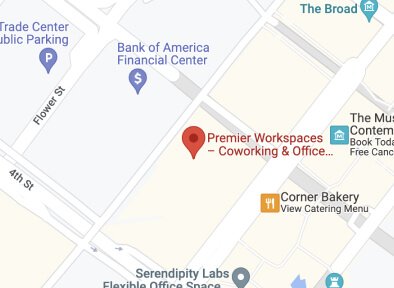
355 S Grand, Suite #2450 Los Angeles, CA 90071
Phone: 213-999-8380
"*" indicates required fields
