Criminal assault and criminal battery are two separate charges. Assault involves intentionally causing someone to fear immediate harm, even if no physical contact occurs. Battery, on the other hand, involves actual physical contact that is harmful or offensive. Both charges can lead to serious legal consequences, including jail time and a criminal record.
If you are facing one or both of these charges, a skilled Los Angeles criminal defense lawyer can help by examining the evidence, identifying legal defenses such as self-defense or lack of intent, and negotiating with prosecutors. Whether fighting for a dismissal, reduced charges, or representing you at trial, your lawyer works to protect your rights and achieve the best possible outcome for your case.

In a criminal case, the prosecutor must prove certain elements beyond a reasonable doubt in order to convict someone of assault or battery. While people often use the terms “assault” and “battery” together, they are actually two separate crimes with different legal definitions. Understanding the elements of each can help you know what the prosecution must show to get a conviction.
For a criminal assault charge, the prosecutor must prove that the defendant intentionally caused another person to fear that they were about to be physically harmed. Importantly, actual physical contact does not need to happen for assault to occur. The key element is the threat of harm that causes fear or apprehension in the victim. The prosecutor must show that the defendant acted in a way that a reasonable person would see as threatening and that the victim genuinely feared that harm was coming. For example, if someone raises their fist and moves toward another person like they are about to punch them, that can be assault—even if the punch never lands.
On the other hand, a criminal battery charge involves actual physical contact. The prosecutor must prove that the defendant intentionally touched or struck another person in a harmful or offensive way without their consent. The contact must be deliberate, not accidental, and it must either injure the person or be considered offensive by a reasonable person. Criminal restraining orders are frequently associated with these cases, as courts may issue them when there is a risk of continued harm or intimidation.
To convict someone of battery, the prosecutor usually needs to prove three key things: the defendant acted intentionally, there was physical contact, and the contact was either harmful or offensive. For assault, the prosecutor must ordinarily show that the defendant had the intent to cause fear, the victim believed harm was about to happen, and that belief was reasonable.
Sometimes, a single act can lead to both assault and battery charges. If a person threatens someone and then actually hits them, both crimes may apply. In both cases, the intent behind the action matters. Accidental behavior or actions taken in self-defense may not qualify as criminal conduct.
Ultimately, the difference between assault and battery comes down to whether physical contact occurred. Both charges are serious, and a conviction can lead to jail time, fines, and a criminal record, depending on the jurisdiction. A skilled defense attorney can challenge the prosecution’s evidence and argue that the required elements were not proven beyond a reasonable doubt.
A criminal conviction for either assault or battery can carry serious penalties and long-lasting consequences. Although the exact punishment depends on the laws in your state, both offenses can result in fines, jail or prison time, and a permanent criminal record. However, the severity of the penalties often depends on whether the charge is considered a misdemeanor or a felony.
In many cases, simple assault is charged as a misdemeanor. This means the penalties might include up to one year in county jail, a fine, probation, and mandatory anger management classes. But if the assault involves a weapon, targets a protected person like a police officer, or causes serious fear or harm, it can be charged as a felony. A felony assault conviction can result in several years in prison, much larger fines, and stricter probation terms.
Battery is also usually a misdemeanor if it involves minor, non-injurious contact. Misdemeanor battery can carry up to one year in jail, fines, probation, and community service. If the victim suffers serious bodily harm or if the battery was committed with a weapon, the charge may be upgraded to felony battery. Felony battery can lead to years in prison, higher fines, and the loss of certain rights, such as the right to vote or own a firearm.
Beyond legal penalties, both assault and battery convictions can have serious collateral consequences. These are long-term effects that impact your life even after your sentence is over. A criminal record can make it difficult to find a job, apply for housing, or get into college. You might lose certain professional licenses or be disqualified from working in certain fields, especially those involving children, healthcare, or law enforcement.
Additionally, if you are not a U.S. citizen, an assault or battery conviction can lead to immigration consequences, including deportation or denial of citizenship. In some cases, victims of the crime can also sue you in civil court for damages.
Overall, the penalties and consequences of assault and battery convictions can follow you for years. That’s why it’s important to take these charges seriously and work with a qualified Los Angeles criminal defense lawyer to protect your rights and your future. What to look for in a criminal defense lawyer includes experience handling similar cases, strong negotiation and trial skills, clear communication, and a proven track record of positive outcomes.
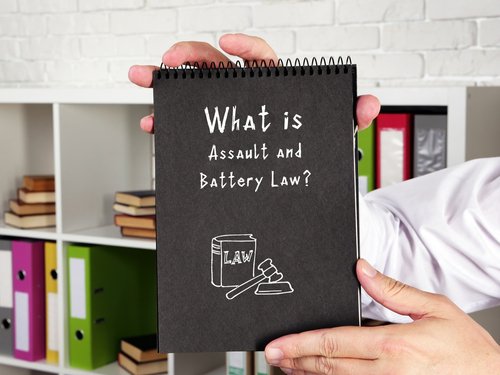
If you are facing criminal assault or battery charges, several legal defenses may be available to fight the accusations. The best defense depends on the facts of your case, but some common and effective strategies can help demonstrate your innocence or reduce the charges.
One of the strongest defenses to assault or battery is self-defense. If you were protecting yourself from someone who was trying to hurt you, the law may allow you to use reasonable force in response. To use this defense, you must show that you believed you were in immediate danger, that your belief was reasonable, and that the force you used matched the level of threat. For example, if someone tried to punch you and you pushed them away to protect yourself, that may be considered self-defense.
Another common defense is the defense of others. Just like self-defense, this argument is used when you stepped in to protect another person from being harmed. You still have to show that the threat was real and that your response was reasonable under the circumstances.
Lack of intent is also a possible defense. Both assault and battery usually require the defendant to act on purpose. If the incident was an accident, or if there was no intention to scare or harm the other person, the charges might not hold up. For instance, if you accidentally bumped into someone and they fell, that is not considered battery. Can you go to jail for these charges? Yes, if convicted, you could face jail time depending on the severity of the incident, the presence of prior offenses, and whether the charge is a misdemeanor or felony.
Consent can be a valid defense in some battery cases. If the other person agreed to the physical contact, like during a sporting event or a mutual fight, it may not be considered a crime.
You can also argue mistaken identity if there is confusion over who actually committed the act. This can happen in chaotic situations with multiple people involved.
Lastly, lack of evidence is a general defense strategy. The prosecution must prove every element of the crime beyond a reasonable doubt. If there are no reliable witnesses, no video footage, or unclear facts, your Los Angeles criminal defense lawyer may be able to get the charges dropped or reduced.
A skilled defense attorney can review your case and build the best strategy to protect your rights and your future.
Facing a criminal assault or battery charge can be overwhelming, but a skilled criminal defense attorney can make a major difference in how your case turns out. These charges can lead to serious penalties, including jail time, fines, and a permanent criminal record. However, an experienced lawyer knows how to protect your rights, challenge the evidence, and fight for the best possible outcome.
First, a criminal defense attorney will carefully review the details of your case, including police reports, witness statements, and any video footage or other evidence. They will look for weaknesses in the prosecution’s case, such as missing information, unreliable witnesses, or violations of your legal rights. If your rights were violated—for example, during your arrest or questioning—your lawyer can have certain evidence thrown out, which can weaken the case against you.
A skilled attorney also understands the law and can explain the specific charges you’re facing. Assault and battery are not always straightforward. Sometimes, what looks like a crime may actually be self-defense or an accident. Your Los Angeles criminal defense lawyer will build a defense based on the facts and present it clearly in court.
In many cases, your attorney can also negotiate with the prosecutor to get the charges reduced or dismissed. This may involve working out a plea deal that avoids jail time or results in lesser penalties. If your case goes to trial, your lawyer will represent you in court, question witnesses, present evidence, and argue on your behalf.
Beyond the courtroom, a defense lawyer can also protect your future. A criminal conviction can affect your job, education, housing, and even immigration status. Your lawyer can work to reduce these long-term consequences by fighting for a clean record or helping you qualify for a diversion program.
Most importantly, a skilled criminal defense attorney is your advocate throughout the process. They will guide you through every step, answer your questions, and ensure you understand your rights. With the right legal help, you have a much better chance of getting a fair outcome and moving forward with your life.
When you are charged with criminal assault or battery, one of the most important decisions you may face is whether to accept a plea deal or go to trial. Each option has benefits and risks, and the best choice depends on the details of your case, the evidence against you, and your personal goals.
A plea deal, also called a plea bargain, is an agreement between you and the prosecutor. In most cases, you agree to plead guilty to a lesser charge or accept a lighter sentence in exchange for avoiding a trial. Plea deals can be helpful if the evidence against you is strong or if you’re trying to avoid the risk of jail or a more serious conviction. For example, instead of going to trial for felony battery, you might plead guilty to a misdemeanor and receive probation instead of time behind bars.
One advantage of a plea deal is that it gives you more control over the outcome. You know what the punishment will be ahead of time, and you avoid the stress, cost, and uncertainty of a trial. A plea deal can also lead to a quicker resolution so you can move forward with your life. In certain workplace violence cases, where emotions may have escalated or facts are in dispute, a plea deal might help resolve the matter without the added strain of a prolonged court process.
On the other hand, going to trial means your case will be presented before a judge or jury. Both sides will show their evidence, question witnesses, and make arguments. If you are found not guilty, you will walk away with no conviction. Trials can be risky because the outcome is uncertain, but they also give you a chance to fully fight the charges. If your lawyer believes the prosecution’s case is weak or if your rights were violated, a trial might be the better choice. A criminal defense attorney for me should be someone who understands these nuances and can confidently guide me through the trial process.
Trials can take longer and are often more expensive, but they may be worth it if you are innocent or if a conviction will seriously impact your future.
A skilled criminal defense attorney can help you weigh the pros and cons of both options. They can negotiate a fair plea deal or prepare a strong defense for trial. Ultimately, your lawyer will help you make the best choice based on your unique situation.

If you are currently charged with criminal assault or battery, it is vital that you hire a knowledgeable criminal defense attorney. Your Los Angeles criminal defense lawyer will aggressively fight for your rights, advocate for your interests, and pursue the best possible result available in your case.
"*" indicates required fields

"*" indicates required fields
